Start with the Region, Not a Single Best Month
The best time to visit Portugal wine country is not one universal month. May and June, or September and October, are useful starting points because they overlap the recommended windows for the Douro, Minho and Alentejo. Lisbon and Sintra, together with Setúbal and Arrábida, offer year-round possibilities. Choose spring for green vineyards and the Alentejo’s wildflowers, summer for long days, or autumn for the possibility of harvest activity. None of these seasonal advantages guarantees particular weather, a winery appointment or participation in vineyard work.
A better question is which part of the journey matters most. If the Douro’s terraced landscape is your priority, begin with its May-to-October window. If Alentejo is central, look first at March through June or September through November. If your dates fall elsewhere, consider the year-round destinations around Lisbon rather than forcing every region into the same itinerary. These are planning preferences, not boundaries beyond which travel becomes impossible. They help you decide where to concentrate your time and where to retain alternatives.
The Douro: Balance the Landscape with the Heat
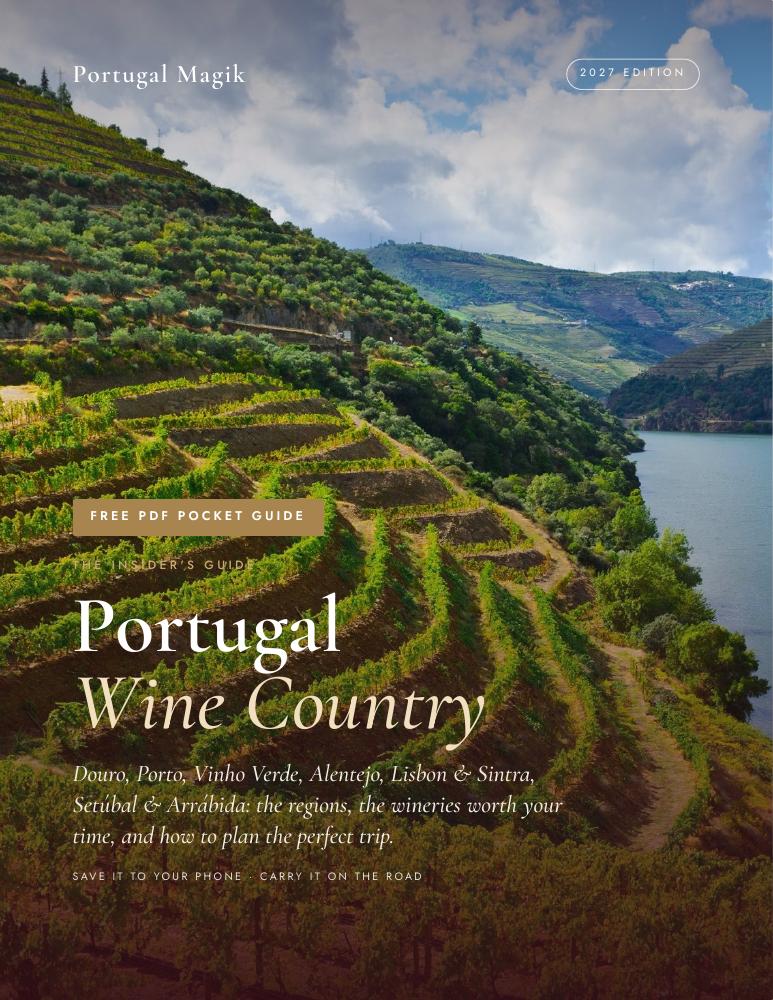
The Douro’s recommended May-to-October period spans several different travel choices. Its schist hillsides, hand-built terraces and winding river provide the landscape; Port and bold reds provide the wine focus. May suits travelers attracted to the guide’s broader spring picture of green vineyards and pleasant temperatures. Summer offers long days, but the Douro can become very hot inland. Rather than treating daylight as an invitation to add more appointments, use it to leave breathing room around the visits that matter most to you.
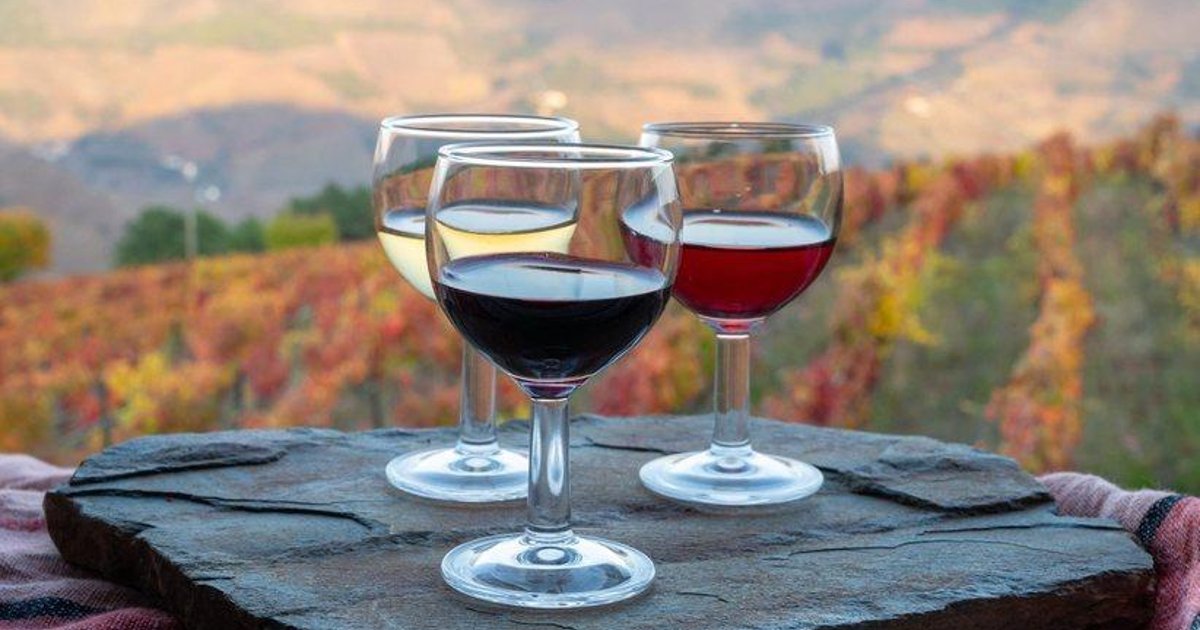
For a summer journey, the guide recommends morning tastings. Build the rest of the day with enough flexibility to respond to the heat, rather than assuming an ambitious outdoor schedule will remain appealing. September and early October bring the possibility of harvest activity, while late October is associated with golden and red vineyard colors. These are different reasons to visit: a traveler seeking autumn scenery need not pursue grape picking. Keep weather, vineyard appearance and estate access as separate considerations, each requiring its own degree of flexibility.
Portugal Magik · 2027 edition
Your pocket guide to Portugal wine country.
Thirty pages of wine regions, selected wineries, native grapes and thoughtful travel inspiration — with Gonzalo’s welcome and Portugal Magik’s trip-planning contacts.
Free PDF · 30 pages · 6.1 MB · No email required
Minho and Vinho Verde: Let Wine Preferences Guide the Date
Minho and Vinho Verde share the Douro’s May-to-October recommendation, but offer a different focus: granite manor houses, vines trained high on pergolas, and wines associated with Alvarinho and Loureiro. The guide characterizes the whites as crisp and refreshing; treat that as a stylistic tendency rather than a promise about every bottle. For travelers drawn to those wines and that landscape, the regional window is a useful starting point. There is no need to choose harvest simply because it sounds like the conventional wine-travel season.
May places a Minho visit within the guide’s spring period, while June through August align with its description of long summer days. September and October remain within the regional recommendation, but should not be interpreted as a fixed timetable for vineyard activity. If combining Minho with the Douro, choose a shared seasonal window and then confirm visits independently. The same travel dates can suit both destinations without producing identical conditions or experiences. Avoid assuming that one region’s harvest plans will explain what is happening at another estate.
Alentejo: Give Spring and Autumn Serious Weight
Alentejo’s recommended windows are March through June and September through November, making it a particularly useful counterpoint to the northern destinations. Rolling plains, cork oaks and whitewashed hill towns frame a wine identity associated with rich reds and talha. Spring has a specific attraction here: the guide highlights wildflowers in the Alentejo alongside green vineyards and pleasant temperatures. If landscape is as important as tasting, that gives spring a clear rationale without requiring a festival, a special estate event or access to wine production.
Summer requires a more deliberate choice because Alentejo, like the Douro, can be very hot inland. June appears in both the regional recommendation and the guide’s summer season, illustrating why calendar categories should not substitute for practical judgment. Morning tastings and a less tightly packed plan are sensible responses. Autumn offers another recommended window, extending through November, but not all of that period should be treated as harvest season. Choose later autumn because it suits your broader journey, not because grape picking will necessarily still be possible.
Lisbon and Sintra, Setúbal and Arrábida: Year-Round Alternatives
Lisbon and Sintra offer a year-round option, with Colares sand wines providing a distinctive wine focus. The combination of palaces and vines in sand gives travelers a reason to choose this destination beyond simply finding somewhere to go outside the northern regions’ recommended months. If your holiday dates are fixed in winter or early spring, it deserves consideration on its own terms. Year-round suitability, however, describes a destination’s travel potential; it does not mean every winery receives visitors whenever an itinerary happens to pass nearby.
Setúbal and Arrábida are also presented as year-round destinations, pairing Moscatel de Setúbal with a landscape of coves and limestone mountains. The practical distinction is between choosing a season for wine visits and depending on particular outdoor conditions. Keep coastal scenery as part of the destination’s appeal without making the entire journey contingent on a specific kind of day. For either destination, confirm the wine appointments first and retain room to adjust the surrounding plan. A flexible calendar is valuable even where the guide does not prescribe a preferred season.
Your dates. Your wines. Your pace.
Make wine country part of your private Portugal journey.
Multi-day travel, transportation and an English-speaking private driver, with selected wineries and places. We help coordinate restaurants, hotels and visits around your plans; availability and costs are confirmed privately.
Harvest: Choose the Possibility, Not a Promise
The guide places harvest broadly in September and early October and notes that some estates invite guests to pick grapes or join traditional foot-treading. That makes early autumn attractive to travelers interested in the working life of wine country. It does not establish an exact date for an individual estate, nor does it imply that participation is routinely available. Build your decision around the possibility of seeing a region during harvest, then ask separately whether any relevant activity can be confirmed for your proposed visits.
Harvest can also make wineries busy, so production activity and visitor access should never be treated as the same thing. If participation is important, allow flexibility in the estate selection and sequence of visits while recognizing that adjustments cannot guarantee an invitation. If your dates are immovable, choose a journey you would still enjoy without picking or foot-treading. Landscapes and confirmed wine visits should carry the itinerary. Harvest can enrich that plan when circumstances allow, rather than becoming the single condition on which the whole holiday succeeds.
Late Autumn and Winter: Separate Scenery from Access
The guide groups October through February together, describing late-October vineyard color in the Douro, fireside tastings and quieter roads. These details should not be read as interchangeable throughout that whole period. Autumn color is a reason to consider a particular seasonal window, not a winter-long feature; a fireside tasting is not an amenity to assume at every estate. Travelers choosing cooler-season dates should identify which elements actually matter to them and seek confirmation where a specific setting is essential to the intended visit.
For November, Alentejo remains within its recommended window, while Lisbon and Sintra and Setúbal and Arrábida retain their year-round positioning. The Douro and Minho recommendations end in October, which calls for more targeted planning afterward rather than a blanket claim that travel is unsuitable. Start with the visits that can be arranged, then shape the journey around them. Keep weather-dependent elements adjustable, and avoid filling every interval simply because roads may be quieter. A quieter season is not a substitute for checking access.
Build a Multi-Day Journey That Can Adapt
Once you have chosen a season, distinguish your essentials from your preferences. An essential might be time in the Douro or an interest in talha; a preference might be autumn color or a particular tasting setting. Reserve the essential visits and leave some freedom around the rest. The guide notes that most wineries receive visitors by appointment, making advance coordination important whatever the season. Hotel arrangements should be handled separately: staying at a vineyard hotel does not, by itself, establish a tasting reservation or access to an estate activity.
For Portugal Magik / The Grand Douro Collection, this approach takes the form of multi-day private journeys with transportation, an English-speaking private driver, selected wineries and places, and assistance coordinating hotel, restaurant and visit bookings. Costs and availability are confirmed privately. The value of planning around your priorities is not a promise of perfect weather or special access; it is a coherent journey that can accommodate practical choices. Pick the season for its regional strengths, confirm the experiences that matter, and leave harvest and weather room to be themselves.
Questions before your wine journey
Which months make sense for a journey covering several wine destinations?
May and June or September and October overlap the recommended windows for the Douro, Minho and Alentejo. Lisbon and Sintra and Setúbal and Arrábida are year-round options. Use those overlaps to narrow the calendar, then weigh heat, scenery and confirmed visits rather than assuming every destination will offer the same seasonal experience.
Should I choose September specifically to take part in harvest?
Only if you are comfortable treating participation as a possibility. The guide broadly identifies September and early October with harvest, and some estates offer picking or foot-treading. Neither activity should be presumed available. Choose dates and visits that remain worthwhile without participation, and request confirmation of any proposed harvest activity separately.
Is summer a poor choice for the Douro or Alentejo?
Not automatically, but heat should influence the plan. Both can be very hot inland, and the guide recommends morning tastings. The Douro’s recommended period includes summer; Alentejo’s includes June but not July and August. If you have date flexibility and dislike heat, give spring or the recommended autumn windows stronger consideration.
Can Portugal Magik help plan around uncertain weather and harvest access?
Portugal Magik offers multi-day private journeys with transportation, an English-speaking private driver, selected wineries and places, and assistance coordinating hotel, restaurant and visit bookings. Planning can prioritize your interests while retaining practical alternatives. Weather, harvest participation and individual appointments are not guaranteed; costs and availability are confirmed privately.
Based on Portugal Magik’s Portugal Wine Country pocket guide, 2027 edition. Estate visits, experiences and reservations are subject to confirmation.