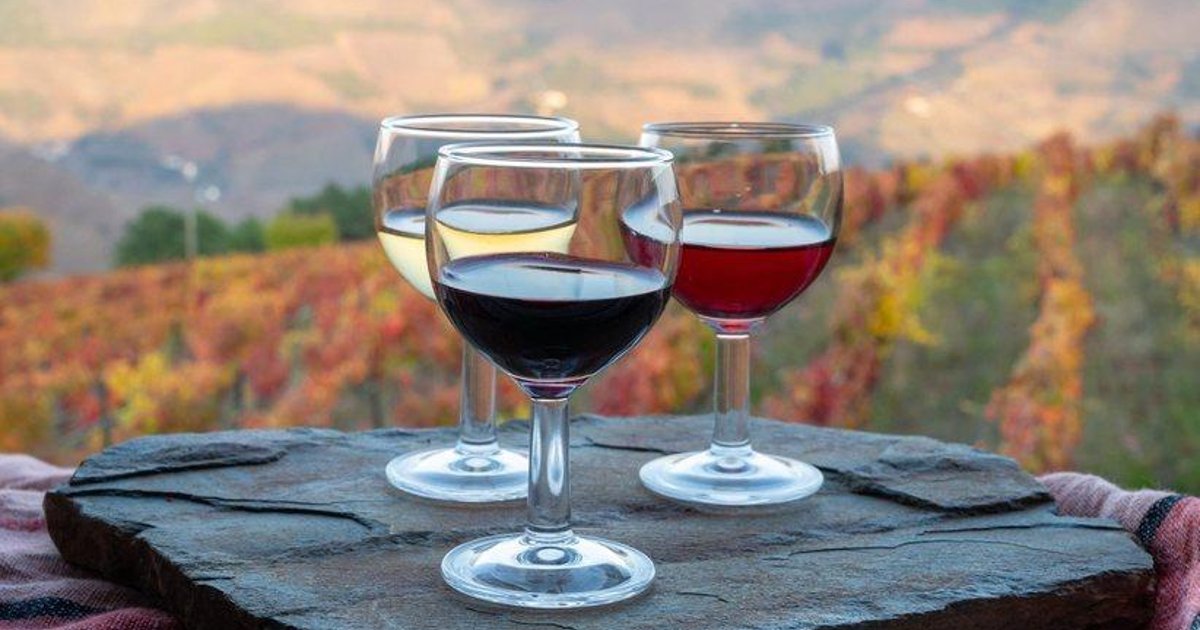
Start with Two Different Wine Conversations
The clearest way to understand Setúbal wine is to separate its celebrated fortified Moscatel from its regional table wines, then decide how much attention each deserves. Moscatel de Setúbal offers an aromatic introduction to the peninsula; Castelão provides a different starting point through the reds associated with Palmela. Neither needs to stand in for the whole region. For a balanced journey, make the contrast itself your organising idea: explore what distinguishes the wines before choosing how many cellars to include.
Across the Tagus from Lisbon, the Setúbal Peninsula brings wine into a landscape of limestone mountains and coastal coves. Azeitão and Palmela sit at the foot of the Arrábida Natural Park, giving the journey several possible centres of gravity. That variety is useful, but it can also encourage an overfilled plan. A better approach is to identify your main interest first: fortified wine, table wine, a particular producer, or a measured combination of wine and coast. Let that choice determine what earns time.
Moscatel: Follow the Aromatics, Not a Checklist
Moscatel de Setúbal is a fortified wine whose extended contact with grape skins helps explain its aromatic character. Orange peel, honey and apricot are useful reference points, not a promise that every bottle will express them equally. Treat those descriptions as questions to carry into a tasting: which impression seems most prominent, and how do the aromas relate to the wine as a whole? This gives you a more personal understanding than simply checking whether a glass matches a familiar tasting note.
Muscat of Alexandria and the rarer Moscatel Roxo are the grapes to recognise here. Roxo can be an interesting subject to ask about, but rarity should not become the sole reason for choosing a visit or judging its success. If a particular wine matters to you, establish whether it can be included before committing to the plan. Otherwise, concentrate on understanding the Moscatel offered. A focused encounter with a style you can discuss thoughtfully is more rewarding than an itinerary built around an unconfirmed bottle.
Portugal Magik · 2027 edition
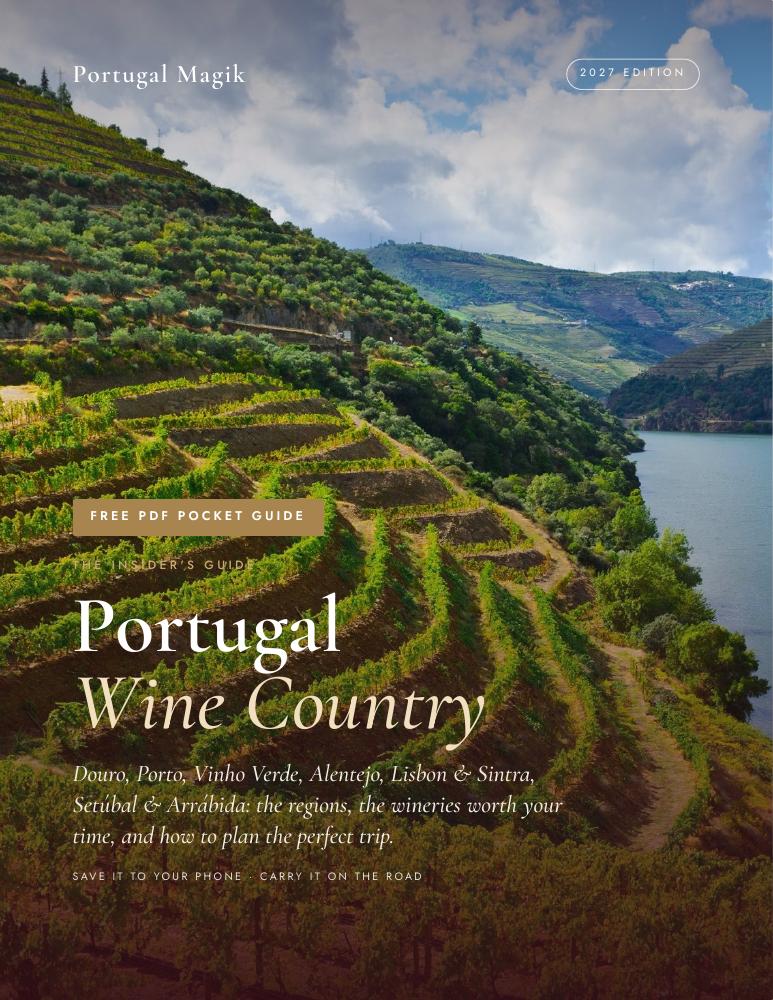
Your pocket guide to Portugal wine country.
Thirty pages of wine regions, selected wineries, native grapes and thoughtful travel inspiration — with Gonzalo’s welcome and Portugal Magik’s trip-planning contacts.
Free PDF · 30 pages · 6.1 MB · No email required
Palmela’s Reds Deserve Their Own Attention
Castelão, also called Periquita, is the central red grape to know in this part of the guide. It thrives on the sandy soils around Palmela and is associated with a softer, red-fruited style. Those are tendencies rather than fixed rules for every wine. If fortified Moscatel initially drew you to Setúbal, give Castelão a separate place in your thinking: it introduces the region through table wine rather than through another interpretation of its famous fortified speciality. That distinction makes the journey broader without making it geographically sprawling.
There are other grape names worth keeping in view without turning the visit into a vocabulary test. Trincadeira is associated with spicy, herbal character and bright acidity, while Fernão Pires offers an aromatic, fruity white-wine reference. Their relevance is as signposts when reading a wine list or discussing a selection, not as guaranteed components of every tasting. Ask which regional table wines are available and choose according to your interests. A visitor who prefers reds need not build the entire journey around Moscatel.
Azeitão: Choose a Producer for a Reason
Azeitão offers several distinct reasons to make a cellar visit. José Maria da Fonseca produces both table wine and Moscatel de Setúbal and is the house behind Periquita, making it relevant to the article’s central comparison. Its historic manor, gardens and old cellars add another dimension to the setting. Bacalhôa brings a different emphasis, with a Renaissance palace and gardens, alongside a winery-museum in Azeitão that connects Moscatel with an art collection. Choose between these interests deliberately rather than assuming that another producer always adds the same kind of value.
Horácio Simões provides another possibility: a small producer associated particularly with complex Moscatel. For someone whose main curiosity is fortified wine, that may be a more useful lead than adding a stop principally for its setting. The practical question is what each proposed visit contributes to your understanding. Ask which wines and spaces are included in the arrangement being considered; the existence of a cellar, garden or collection does not itself establish access. One well-matched visit can be a stronger foundation than several chosen only because they share an Azeitão address.
Give Palmela a Coherent Place in the Journey
Palmela works best as a purposeful cluster rather than an extra name appended to an Azeitão schedule. Its connection with Castelão and sandy vineyard soils gives it a clear wine identity, while the hilltop castle offers views over the estuary and vineyards. Together, these provide a sensible pairing of cellar interest and landscape. If regional reds are your priority, consider making Palmela the organising focus of a portion of the journey, instead of leaving its wines to whatever time remains after Moscatel visits elsewhere.
The Palmela wine route suggests combining a cellar visit with the castle, but the combination still needs practical checking. Decide which element matters most and protect enough time for it before adding the other. A landscape stop should not depend on a tasting ending unusually quickly, nor should a cellar visit feel hurried because the schedule has become a sequence of obligations. Grouping these interests gives a plan coherence; it does not create a guaranteed timetable. Keep the final sequence responsive to the visits that can actually be arranged.
Your dates. Your wines. Your pace.
Make wine country part of your private Portugal journey.
Multi-day travel, transportation and an English-speaking private driver, with selected wineries and places. We help coordinate restaurants, hotels and visits around your plans; availability and costs are confirmed privately.
Let Arrábida Set the Pace, Not Fill a Gap
The Arrábida coast is part of the appeal here, not merely scenery between glasses. Limestone mountains and coves offer a contrasting rhythm to time spent discussing wines in a cellar. The useful planning decision is whether you want the coast to be a substantial part of the journey or simply a supporting element. Either choice can work. What tends to weaken the experience is asking the same stretch of itinerary to deliver an extensive wine comparison, several producer visits and an equally unhurried coastal interlude.
Azeitão, Palmela and the coastline are best treated as related clusters whose balance depends on your priorities, not as a circuit with a promised completion time. Sesimbra can also belong in the coastal conversation, but its inclusion should serve the journey rather than lengthen a list. Allow the actual arrangements to shape the order and leave space between commitments. If coast and wine matter equally, distribute them across the journey instead of expecting every portion to contain both. Restraint here is a practical way of preserving attention.
Make Room for Azeitão Beyond the Glass
Azeitão has two food specialities that give a wine-focused journey another point of reference: queijo de Azeitão, a creamy sheep’s cheese, and torta de Azeitão, a rolled sponge cake. They are worth considering in their own right rather than treating them only as accessories to a tasting. You do not need to invent a definitive wine pairing to make them relevant. A pause to explore local food can broaden the day’s texture while keeping the journey rooted in the same place and avoiding another cellar appointment.
Seafood also belongs to the coastal inspiration for this area, but a meal should be planned as a real part of the itinerary rather than squeezed into an assumed gap. Decide whether food is a principal interest or a welcome pause between other activities. That distinction helps determine what to reserve and what to leave flexible. It also prevents a common planning mismatch: selecting several wines for careful attention while giving the meal and surrounding landscape only whatever time is left. Fewer commitments can produce a more coherent regional experience.
Build a Multi-Day Journey Around What Matters
A strong final plan should make its priorities obvious. A Moscatel-led journey might give Azeitão greater weight, with table wine providing a deliberate contrast. A red-wine-led journey might place more emphasis on Palmela, while retaining a focused introduction to fortified Moscatel. A coast-led version should protect meaningful time around Arrábida rather than promise an exhaustive cellar programme. These are planning frameworks, not fixed packages: the right balance follows from your preferences and from the visits that can be confirmed, with no need for drive-time guarantees.
For Portugal Magik / The Grand Douro Collection, this approach takes the form of multi-day private journeys with transportation, an English-speaking private driver, selected wineries and places, and assistance coordinating hotel, restaurant and visit bookings. Costs and availability are confirmed privately. The value of that framework is the ability to build around a clear interest without making every stop compulsory. Keep accommodation and winery arrangements distinct: choosing a hotel, including a vineyard hotel, does not by itself secure a tasting reservation. Confirm the elements that matter before treating the itinerary as settled.
Questions before your wine journey
Is Setúbal wine always fortified Moscatel?
No. Moscatel de Setúbal is the region’s famous fortified wine, but regional table wines deserve separate attention. Castelão, also called Periquita, is particularly relevant around Palmela. For a useful introduction, look for an opportunity to understand both categories rather than assuming a Moscatel tasting represents every aspect of Setúbal wine.
Should I prioritise Azeitão or Palmela?
Choose according to the question you most want the journey to answer. Azeitão offers named producers with Moscatel, table-wine and cultural interests. Palmela gives a clear focus to Castelão, vineyards and the hilltop castle. You can include both, but give each a purpose rather than treating proximity as a reason to add appointments.
Is Moscatel Roxo essential to a worthwhile tasting?
No. Moscatel Roxo is a rarer grape worth asking about, but a rewarding introduction need not depend on it. Focus on understanding the wines actually offered and use aromatic descriptions as guides rather than guarantees. If Roxo is a particular priority, ask whether it can be included before confirming the visit.
How can Portugal Magik help organise this wine journey?
Portugal Magik offers multi-day private journeys with transportation, an English-speaking private driver, selected wineries and places, and assistance coordinating hotel, restaurant and visit bookings. Share whether Moscatel, table wines or the coast matters most so the proposed itinerary has a clear focus. Costs and availability are confirmed privately; individual arrangements should not be assumed.
Based on Portugal Magik’s Portugal Wine Country pocket guide, 2027 edition. Estate visits, experiences and reservations are subject to confirmation.