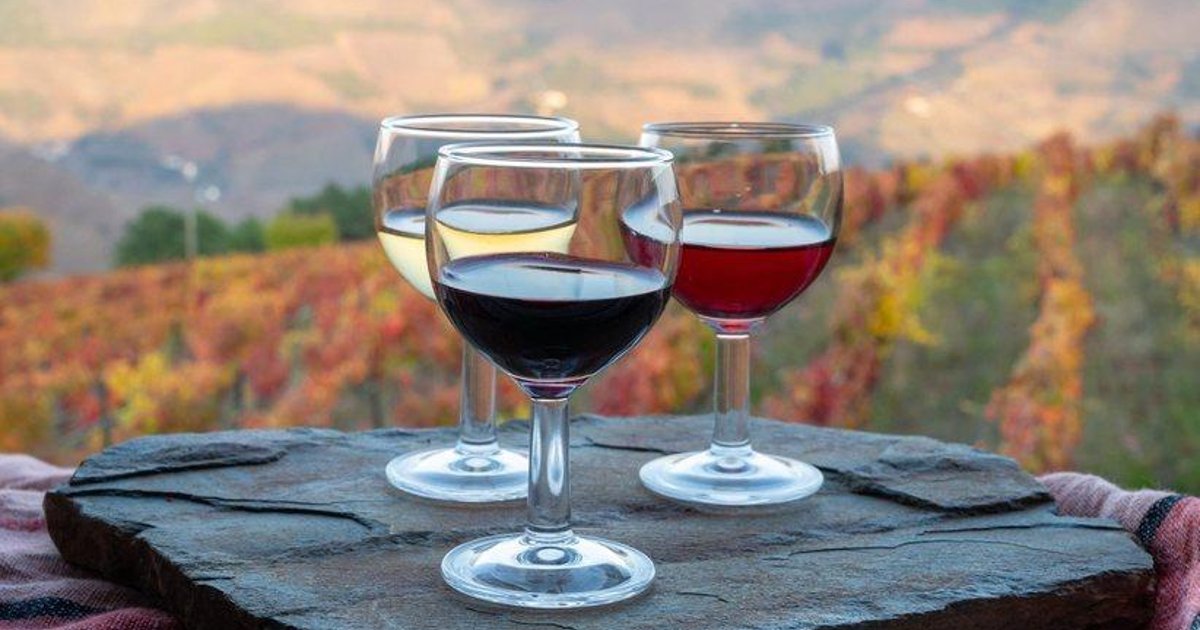
Begin with the Wines, Then Draw the Route
For thoughtfully planned Douro Valley wine tours, start by deciding whether Port, dry Douro wines or a comparison of both matters most. Then choose a compact group of quintas within a coherent part of the valley. This reverses the temptation to collect estate names before understanding their relationship to one another. A shortlist should explain why each stop belongs: perhaps a Port house, an estate known for dry reds and a contrasting setting. The aim is not to exhaust the Douro, but to give each visit a distinct purpose.
The setting deserves equal consideration. Hand-built terraces climb schist hillsides above the river, and the roads follow narrow, winding courses through the landscape. A route that appears compact on a map can still feel crowded if every pause has been assigned to another appointment. Treat lunch, an overnight stay and time simply to look across the terraces as parts of the journey rather than gaps to fill. Before adding an estate, ask what it contributes that the existing choices do not already offer.
Read the Valley Through Its Subregions
The Douro follows its river from near the Spanish border toward the Atlantic, but its subregions give that broad geography useful definition. Baixo Corgo, around Peso da Régua, is the coolest and greenest. Cima Corgo, centered on Pinhão, contains many established Port estates. For planning purposes, these are more than names to remember: they help organize an initial shortlist around a place rather than a scattered collection of recommendations. Start with the area containing your strongest estate interests, then consider whether crossing into another area adds meaningful contrast.
Farther east toward Spain, Douro Superior is hotter and wilder, with a growing reputation for powerful red wines. That makes it a deliberate extension rather than an automatic addition to every itinerary. Across the valley, the predominantly schist soils hold heat and encourage roots to search deeply for water; the terraces reflect generations of work shaping that rock. Use the subregions as a framework for understanding landscape and broad wine tendencies, not as a promise that every wine from the same area will taste alike.
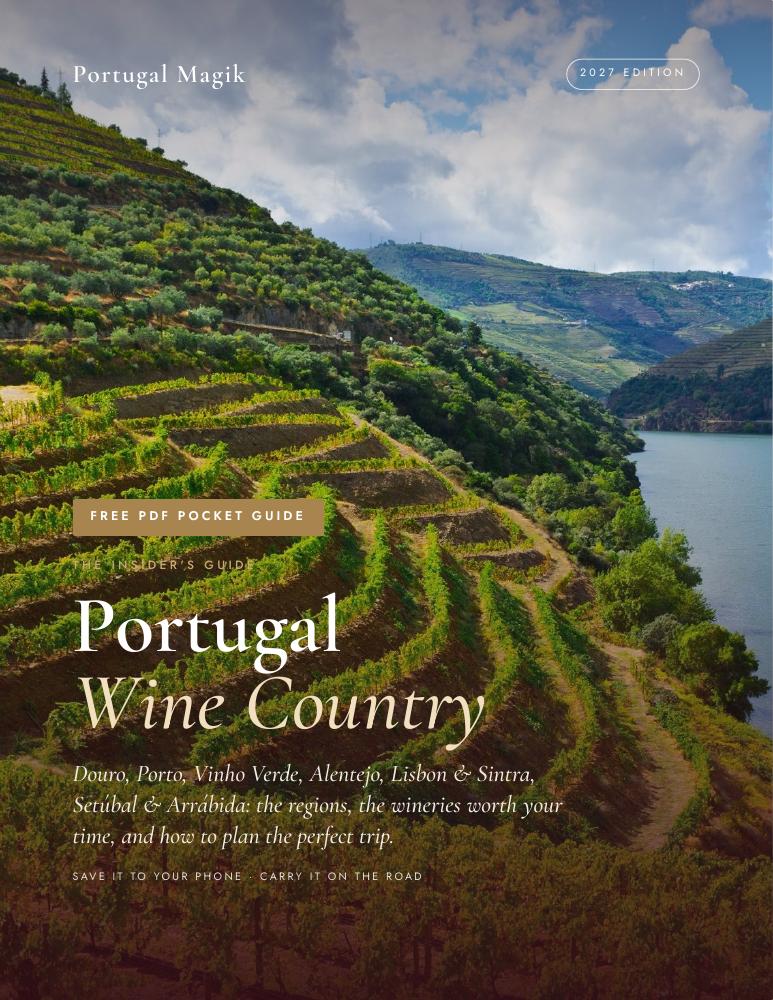
Portugal Magik · 2027 edition
Your pocket guide to Portugal wine country.
Thirty pages of wine regions, selected wineries, native grapes and thoughtful travel inspiration — with Gonzalo’s welcome and Portugal Magik’s trip-planning contacts.
Free PDF · 30 pages · 6.1 MB · No email required
Port and Dry Douro Wines Are Different Interests
The Douro is the birthplace of Port, but Port is not a catch-all name for everything made here. The valley also produces dry wines, including reds built on Touriga Nacional and Touriga Franca. That distinction should shape your enquiries: a visit chosen for its Port association is not necessarily the same proposition as one chosen to explore dry reds. Ask which category a proposed tasting emphasizes, and whether both can be considered. Do not assume that an estate’s production range will all appear in a particular visit.
Quinta do Crasto offers a useful starting point for a dry-red interest because it produces dry reds alongside Port. Quinta de la Rosa also produces both Port and Douro wines, making it another candidate when comparison matters. For a more specifically Port-led shortlist, Quinta do Bomfim’s connection to Dow’s and Quinta do Seixo’s connection to Sandeman provide clear reference points. Think of descriptions such as powerful or elegant as tendencies that guide curiosity, rather than guaranteed flavors or a substitute for asking what will actually be presented.
Build a Focused Shortlist Around Pinhão
Cima Corgo offers several different reasons to visit without requiring every estate to serve the same role. Near Pinhão, Quinta do Crasto is a family estate high above the river, with a useful dry-wine focus for your shortlist. Nearby Quinta Nova de Nossa Senhora do Carmo combines a historic estate with a boutique hotel, restaurant and vineyard walking trails; it is also home to the Mirabilis wines. Choose between them according to the emphasis you want, rather than treating neighboring estates as compulsory consecutive stops.
For Port, Quinta do Bomfim is the Symington family’s home of Dow’s, within walking distance of Pinhão station, with a terrace over the river. Quinta do Seixo, at Valença do Douro, is Sandeman’s estate and has a modern visitor center above the terraces. Quinta do Noval is another Port-focused candidate, but its visits are private and by appointment only. A sensible shortlist might retain one of these as its Port anchor and another estate for contrast, with any appointment-dependent choice remaining provisional until arrangements are confirmed.
Choose Baixo Corgo for a Different Estate Emphasis
Around Peso da Régua, Quinta do Vallado brings together estate history, a modern winery and a wine hotel. Its association with Dona Antónia Ferreira gives a historical thread to explore alongside the contemporary setting. This is a different selection criterion from choosing only by a particular wine category: the relationship between an estate’s past and present may be what interests you most. If that is your priority, make it explicit when enquiring about a visit instead of assuming every tasting will give equal attention to history and design.
Near Lamego, Quinta da Pacheca is a candidate for travelers interested in activities beyond a conventional tasting. The pocket guide describes cooking classes, picnics and harvest grape stomping in season, as well as accommodation that includes barrel-shaped suites. These are reasons to ask specific questions, not promises that every activity can be arranged for your dates. A shortlist pairing Vallado with Pacheca should rest on genuinely different interests. If both appeal mainly because they offer accommodation, choose your preferred stay separately from the question of which winery visits would be most worthwhile.
Your dates. Your wines. Your pace.
Make wine country part of your private Portugal journey.
Multi-day travel, transportation and an English-speaking private driver, with selected wineries and places. We help coordinate restaurants, hotels and visits around your plans; availability and costs are confirmed privately.
Add Contrast Only When It Earns Its Place
Other Cima Corgo estates can change the character of a shortlist without turning it into a catalogue. Quinta do Tedo sits where the Tedo meets the Douro, with organic vineyards and a bed and breakfast. Quinta de la Rosa is a family estate on the riverbank just outside Pinhão, producing Port and dry Douro wines, with guest rooms and a restaurant. Either may deserve consideration for a particular combination of wine interest and setting. Neither needs to be added simply because its name appears alongside your existing choices.
Quinta de Ervamoira offers a different geographical proposition. Ramos Pinto’s estate lies near Foz Côa in Douro Superior and has a small museum about the region and the house; the pocket guide also suggests combining it with the Côa Valley rock art. Consider this eastern extension if that broader cultural interest matters to you, not merely to claim coverage of every subregion. An unhurried itinerary can be selective. Staying within one area and understanding it more closely may be a better fit than widening the route without a clear reason.
Let the Landscape Set the Pace
The terraces are not just scenery between appointments. They are the result of farmers breaking and shaping schist by hand, part of the cultural landscape recognized by UNESCO. Give that context room to register. Pinhão station’s azulejo tiles depict harvest scenes, while Miradouro de São Leonardo de Galafura offers another way to take in the valley. Choose pauses that deepen your understanding rather than treating every landmark as another obligation. A quieter interval can make the difference between remembering individual estates and understanding the landscape that connects them.
An overnight base should support that rhythm. The Vintage House is beside the river in central Pinhão, while Quinta Nova and Quinta do Vallado offer stays at working estates. Consider which location best serves the visits you actually want, rather than choosing a hotel first and stretching the route around it. Crucially, a vineyard hotel is not a guaranteed tasting reservation. Keep accommodation, winery visits and restaurant arrangements as separate decisions, and leave room to revise the order if the preferred combination cannot be confirmed for your travel dates.
Turn the Shortlist into a Multi-Day Journey
Before making arrangements, reduce the shortlist to a clear set of priorities. Identify the estate that best answers your central wine interest, the visit that offers a meaningful contrast and any place you would happily omit if it complicates the route. Then frame practical questions around the proposed wine selection, the nature of the visit and any activity that depends on season or appointment. This is especially important for a private visit at Quinta do Noval or seasonal participation at Quinta da Pacheca: an attractive possibility should not be treated as a confirmed plan.
For Portugal Magik / The Grand Douro Collection, that approach belongs within a private multi-day journey, not a compressed tasting circuit. Portugal Magik offers multi-day private travel with transportation, an English-speaking private driver, selected wineries and places, and assistance coordinating hotel, restaurant and visit bookings. Costs and availability are confirmed privately. The value of planning this way is the ability to shape a coherent route around your interests while leaving space between its commitments. The final itinerary should feel like a considered selection, not an attempt to include every estate.
Questions before your wine journey
Which Douro subregion should I choose for a first visit?
Choose according to your strongest estate interests. Cima Corgo, around Pinhão, offers several Port-focused candidates alongside estates producing dry wines. Baixo Corgo, around Peso da Régua, includes Vallado and Pacheca, with different historical and activity-led interests. Douro Superior makes sense when its eastern landscape and Ervamoira are deliberate priorities, rather than additions made simply to cover more ground.
Can I explore the Douro if I am more interested in dry wines than Port?
Yes. The Douro produces dry wines as well as Port, with dry reds associated with Touriga Nacional and Touriga Franca. Quinta do Crasto and Quinta de la Rosa are relevant candidates for that interest. Ask about the proposed tasting selection before committing: producing dry wines does not establish which wines will be available during a particular visit.
Does staying at a quinta mean a tasting is already arranged?
No. Treat accommodation and winery access as separate arrangements. Estates such as Quinta Nova and Quinta do Vallado offer overnight stays, but that alone does not confirm a tasting reservation or its contents. Establish which visits require separate coordination, and check any restaurant or activity plans independently rather than assuming they accompany the room booking.
How can Portugal Magik help shape an unhurried Douro itinerary?
Portugal Magik arranges only multi-day private journeys, with transportation, an English-speaking private driver, selected wineries and places, and assistance coordinating hotel, restaurant and visit bookings. Begin with your preferred wine focus and a small estate shortlist. The route can then be developed around those priorities, with costs and availability confirmed privately rather than assumed from the initial ideas.
Based on Portugal Magik’s Portugal Wine Country pocket guide, 2027 edition. Estate visits, experiences and reservations are subject to confirmation.