
A Seven-Day Route That Makes Deliberate Choices
For a balanced seven-day Portugal wine tour itinerary, begin with Lisbon, Sintra and Colares, devote a day to Arrábida and Azeitão, then travel north without a cellar appointment waiting at the end. Give Porto and Gaia their own day before spending the final two days in the Douro. This is a selective journey, not a comprehensive circuit. It omits both the Alentejo and a dedicated Minho–Vinho Verde excursion so that the destinations in the title receive meaningful attention rather than becoming brief stops between transfers.
The guide’s seven-day inspiration includes the Alentejo before continuing north via Coimbra, but that leaves little room for a separate Porto lodge day. The outline here makes a different editorial choice: remove that southern detour and protect time in Gaia. The guide covers six travel destinations, not every Portuguese wine region, and Porto and Gaia’s lodges should not be treated as a separate appellation. If visiting all six matters more than keeping the journey to a week, the sensible response is to extend the trip.
Day One: Begin in Lisbon Without Racing to a Tasting
Use the opening day for Lisbon and for settling into the journey rather than treating arrival as the first test of endurance. Keep the schedule flexible enough to accommodate the actual time you reach the city. If the day is available in full, it can hold more exploration; if it begins late, let it remain deliberately light. The important planning decision is not which extra appointment to squeeze in, but whether a fixed wine visit would improve the day or merely make every earlier movement feel time-sensitive.
This opening pause also gives the week a useful sense of proportion. The next two days introduce wine country near Lisbon, while the later stages explore Port through Gaia’s lodges and the Douro’s estates. There is no need to make the first evening carry that whole story. Decide instead what you most want from the forthcoming visits: time to ask questions, a closer look at vineyard settings, or a measured comparison of wines. Those preferences should determine subsequent appointments rather than an ambition to accumulate the longest tasting list.
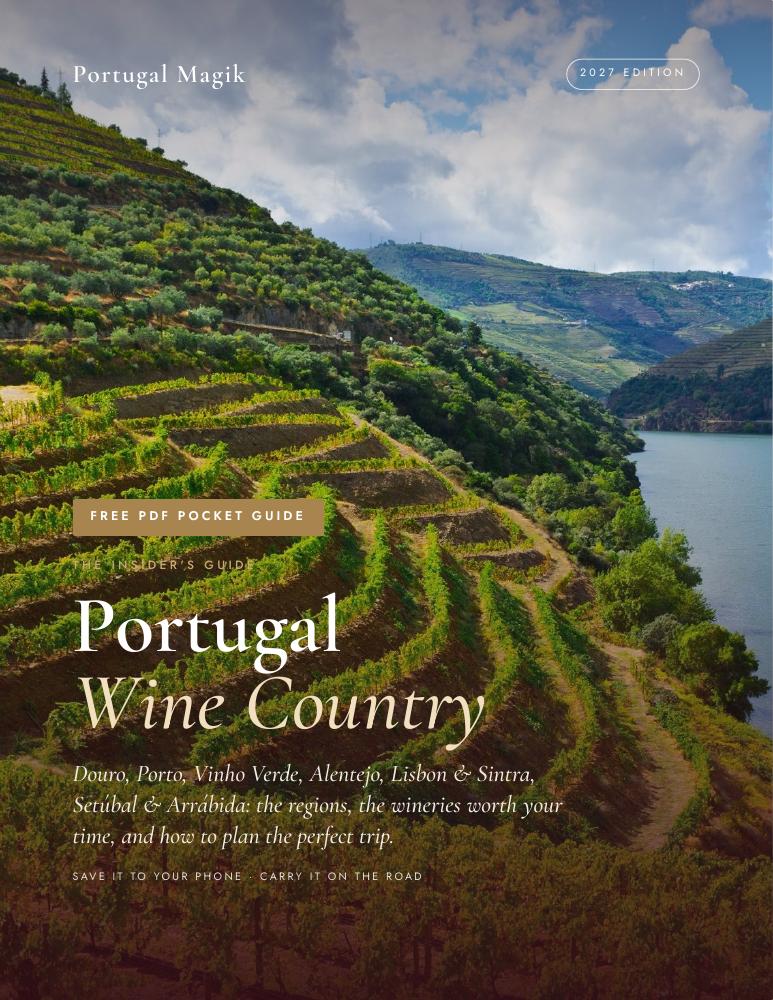
Portugal Magik · 2027 edition
Your pocket guide to Portugal wine country.
Thirty pages of wine regions, selected wineries, native grapes and thoughtful travel inspiration — with Gonzalo’s welcome and Portugal Magik’s trip-planning contacts.
Free PDF · 30 pages · 6.1 MB · No email required
Day Two: Give Sintra and Colares a Shared Day
The guide pairs Sintra’s hills and Pena Palace with a Colares tasting, suggesting lunch by the sea and Cabo da Roca as further possibilities. Within this week-long route, use that combination as a menu of choices rather than a checklist. A traveler keen on cultural sightseeing might make Pena Palace the principal morning commitment and arrange the wine visit around it. Someone more interested in wine can reduce the sightseeing component. The aim is a day with two complementary interests, not several competing appointments.
Colares deserves a place in the itinerary because it makes the Lisbon portion more than a city stay before the journey north. The guide’s sand-vineyard theme provides a distinct focus, but avoid turning that into assumptions about what every tasting will show or which vineyard areas will be accessible. Confirm the actual visit format before committing. If lunch by the sea and a stop at Cabo da Roca are both appealing, retain them only where they fit comfortably around the confirmed wine appointment rather than compressing the tasting itself.
Day Three: Arrábida and Azeitão, With Moscatel at the Center
For the third day, draw on the guide’s Arrábida coastal route, seafood lunch in Sesimbra and historic cellars with Moscatel tasting in Azeitão. This combination supplies a clear organizing idea: landscape, a proper lunch and a focused wine encounter. Keep the cellar visit as the fixed point and make the surrounding stops responsive to it. There is no need to add another destination simply because the map makes one look nearby. A day with breathing room will sit more comfortably within a journey that still has substantial northward travel ahead.
This is also the moment to resist adding the Alentejo as a compulsory extra. Évora, Monsaraz and an Alentejo winery stay belong to the guide’s broader inspiration, but they require room of their own. Within seven days, replacing Arrábida with an Alentejo-focused day is a possible change of emphasis; treating both as essential risks borrowing time from Porto or the Douro. Choose according to genuine interest rather than completeness. For this version, Arrábida and Azeitão remain the final wine-country chapter near Lisbon before the route turns north.
Day Four: Travel North, With No Cellar-Hopping
Make the fourth day a genuine transfer from Lisbon to Porto. The guide suggests northbound stops in Óbidos, Nazaré, Coimbra or Aveiro; its longer itinerary specifically uses Coimbra. Select a stop because you want to spend time there, not because every suggested place needs to appear on the route. One considered interruption can give the journey shape without turning it into a procession of arrivals and departures. Leave enough flexibility to shorten or omit that stop if the day’s actual progress makes a simpler transfer the better choice.
Do not schedule cellar-hopping on this day, and do not make an arrival tasting the reward you must reach on time. Although the guide mentions a northbound journey ending with Port in Gaia, this outline deliberately separates travel from the lodge experience. Arrival in Porto should close the transfer rather than begin another timed program. That distinction protects both days: sightseeing en route does not have to compete with a tasting reservation, and tomorrow’s Port visit can receive attention without being squeezed into whatever energy and time remain.
Your dates. Your wines. Your pace.
Make wine country part of your private Portugal journey.
Multi-day travel, transportation and an English-speaking private driver, with selected wineries and places. We help coordinate restaurants, hotels and visits around your plans; availability and costs are confirmed privately.
Day Five: Understand Port Through Gaia’s Lodges
With the transfer behind you, give Porto and Gaia a day that is not measured solely in tasting appointments. Choose a principal lodge visit and leave space around it before deciding whether another would add something worthwhile. Port is fortified, and repeated tastings can become demanding rather than illuminating. The useful question is what a second appointment contributes: a different perspective, a particular interest, or simply more glasses. Popular houses should be arranged ahead, but an ambitious schedule is not a substitute for a well-chosen first visit.
The guide offers several ways to broaden this day without making it another winery circuit. WOW, the World of Wine cultural district in Gaia, has museums addressing wine, cork and Porto’s history. Jardim do Morro and the Serra do Pilar monastery terrace offer outlooks over the river and city. The rabelos, flat-bottomed boats formerly used to carry Port barrels from the Douro, connect the waterfront to the valley you will visit next. Choose among these according to your interests, allowing the lodge appointment to remain the day’s anchor.
Days Six and Seven: Stay in the Douro Rather Than Rush Through
Enter the Douro on day six with a restrained program and plan to stay overnight. The guide emphasizes narrow, winding roads and warns that apparently short distances can be misleading. Give the first estate visit and lunch enough room, then consider whether anything further genuinely fits. A river cruise from Pinhão appears in the guide’s inspiration, but it should be an option to coordinate, not an automatic addition. The central decision is to spend time in the valley rather than reproduce a compressed excursion with a hotel added afterward.
Day seven can hold a final tasting and lunch before returning to Porto, following the guide’s suggested sequence, provided onward arrangements leave sufficient room. If departure commitments dominate the day, reduce the wine program instead of forcing it. Accommodation choices in the guide include The Vintage House in Pinhão and working-estate stays at Quinta Nova and Quinta do Vallado. Choose lodging for the shape of the stay, but arrange visits separately: sleeping among vines does not itself secure a tasting reservation, an estate lunch or access to a particular part of a property.
Turn the Outline Into a Journey That Fits
Before fixing the sequence, check the season and the availability of the visits that matter most. The guide notes that the Douro and Alentejo can be very hot in summer, making morning tastings a sensible preference. Harvest can bring busy estates; participation in grape picking or foot-treading must never be assumed. Sundays and public holidays may also mean closures or reduced hours. These considerations can justify rearranging a local day, but they should not undo the itinerary’s central discipline: keep the northbound transfer separate from tasting commitments.
For Portugal Magik / The Grand Douro Collection, this outline is a starting point for a multi-day private journey rather than a fixed package. Portugal Magik offers transportation, an English-speaking private driver, selected wineries and places, and assistance coordinating hotel, restaurant and visit bookings. Costs and availability are confirmed privately; the itinerary should not imply that rooms, meals or tastings are included. The most useful brief identifies priorities and acceptable omissions. If all six guide destinations are essential, request a longer journey rather than asking seven days to accommodate them all.
Questions before your wine journey
Is seven days enough for Lisbon, Porto and the Douro?
Yes, for a selective route with protected travel time. This outline gives the Lisbon area three days, reserves the fourth for traveling north, and divides the remainder between Porto/Gaia and the Douro. It works best when arrival and departure arrangements support that structure. If they consume substantial sightseeing time, reduce appointments or add nights rather than compressing every day.
Should I include Vinho Verde and the Alentejo in the same week?
Not as additions to this already full outline. Both appear among the guide’s six travel destinations, but including them would require substitutions or a longer stay. Decide which matters most and reshape the route accordingly. For all six destinations, allow longer than a week; the purpose is meaningful time in each place, not simply passing through.
Does staying at a Douro wine estate guarantee a tasting?
No. Treat the room reservation and wine visit as separate arrangements. The guide identifies working-estate accommodation, but that does not establish access to a particular tasting, lunch or vineyard visit. Confirm the experience you want explicitly, then check that its timing works with arrival, meals and onward travel before building the rest of the day around it.
How can Portugal Magik help arrange this itinerary?
Portugal Magik offers multi-day private journeys with transportation, an English-speaking private driver, selected wineries and places, and assistance coordinating hotel, restaurant and visit bookings. Share your preferred pace, wine interests and essential stops so the outline can be adapted. Costs and availability are confirmed privately, without assuming accommodation, meals or tasting charges are included.
Based on Portugal Magik’s Portugal Wine Country pocket guide, 2027 edition. Estate visits, experiences and reservations are subject to confirmation.