Start with the Journey, Not a List of Wineries
For a multi-day wine tour in Portugal, a private driver is most useful when transport is planned together with overnight stays and winery appointments. The aim is not simply to move between tastings: it is to build a sequence that works from departure to the final hotel arrival. Begin with your starting point, the destinations that matter most and how often you want to change hotels. Those decisions give individual visits a sensible place in the journey, rather than leaving the route to accommodate an expanding wish list.
Separate essential experiences from optional interests before requesting reservations. You might place vineyard stays ahead of city evenings, or prefer time in Port lodges to another countryside stop. Neither choice is inherently better; each produces a different itinerary. A useful planning brief explains what you want to spend time doing, not just which names you recognize. It should also describe your preferred balance between wine, meals and time without appointments, so that the finished journey reflects the way your group actually likes to travel.
Choose Destinations That Belong in the Same Route
The pocket guide organizes wine travel around six destinations: Sintra and Colares, Setúbal and Azeitão, Évora and the Alentejo, Porto and Gaia, Minho and Vinho Verde, and the Douro Valley. These are travel groupings, not a complete inventory of Portuguese wine regions. Porto and Gaia belong in the plan for their Port lodges, rather than as a separate appellation. Treat the destinations as choices to evaluate against your interests, not a checklist that every multi-day journey should attempt to complete.
Lisbon or Porto can provide a starting point, but the departure city should not dictate an overextended route. If traveling north from Lisbon, the guide suggests possible stops in Óbidos, Nazaré, Coimbra or Aveiro. Consider these alternatives rather than an instruction to stop everywhere. A transfer with sightseeing already has its own demands; attaching an important tasting to its end deserves careful review. Decide whether that travel day should emphasize the journey itself or preserve energy and flexibility for a confirmed wine appointment.
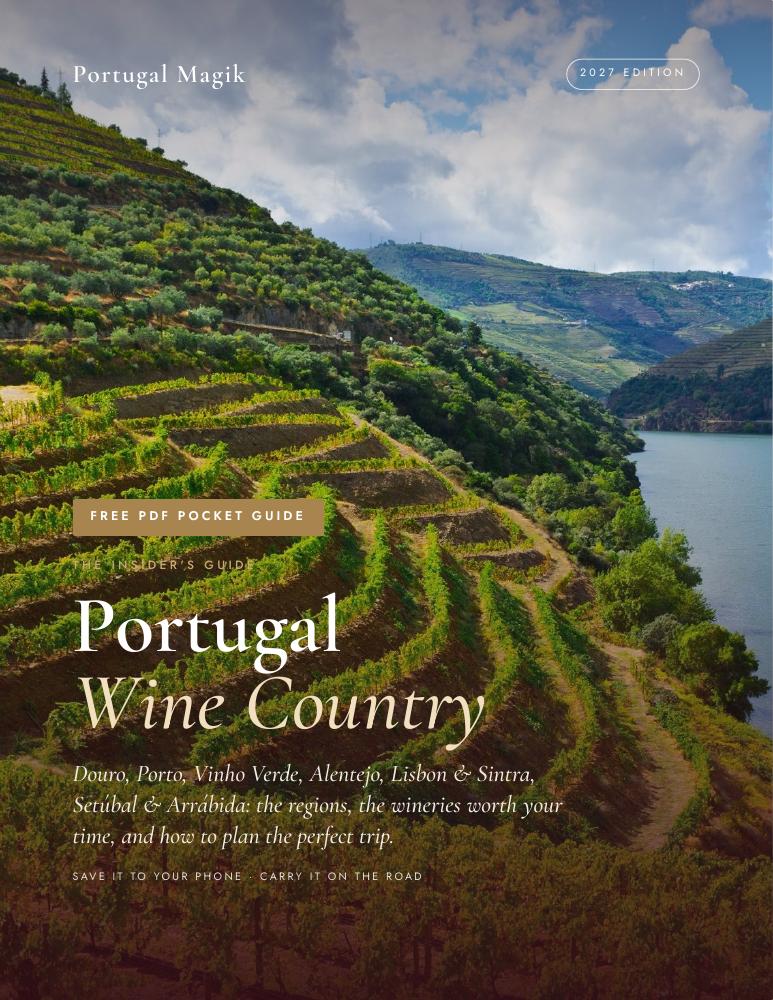
Portugal Magik · 2027 edition
Your pocket guide to Portugal wine country.
Thirty pages of wine regions, selected wineries, native grapes and thoughtful travel inspiration — with Gonzalo’s welcome and Portugal Magik’s trip-planning contacts.
Free PDF · 30 pages · 6.1 MB · No email required
Give Douro Roads a Real Place in the Schedule
The Douro requires particular care because its roads are narrow and winding, following the hillsides rather than the apparent simplicity of a map. A short-looking distance should not be treated as an invitation to add another estate. Build the day around the order of visits, the lunch location and the overnight base. The guide encourages staying in the valley; for a multi-day itinerary, that is a useful principle because it makes the Douro a place to spend time, not merely a destination reached between transfers.
Ask for the proposed route to be reviewed as a complete day, including departures and returns, rather than assessing each transfer separately. A pleasing morning can become a tiring afternoon if every appointment sends the group in another direction. Leave breathing room around lunch and avoid making the final visit depend on every earlier element finishing precisely on schedule. The purpose of that margin is not to fill it later. It protects the unhurried pace that makes a vineyard conversation or a meal worth arranging.
Use Overnight Bases to Simplify the Next Morning
Choose accommodation with the following day's route in mind, not only the appeal of the property itself. The guide identifies The Vintage House in central Pinhão and Six Senses Douro Valley near Lamego, while Quinta Nova and Quinta do Vallado offer stays at working estates. These are different settings to consider when shaping a base. Before choosing, ask how each location fits the intended visits, where dinner might take place and whether you prefer returning to familiar surroundings or moving onward through the itinerary.
A vineyard hotel and a tasting reservation are separate decisions. Sleeping at an estate should never be taken as confirmation that a particular visit, host or tasting slot will be available. Coordinate the accommodation request and the wine appointment explicitly, then check how they fit with the rest of the route. The same discipline applies to changing hotels: consider the departure, luggage movement, lunch and arrival together. If a move complicates the day without advancing a clear travel priority, keeping the existing base may be the better choice.
Make English-Speaking Communication Part of the Brief
An English-speaking private driver can make the practical exchanges of a multi-day journey more straightforward: discussing the next departure, clarifying where to meet and communicating changes to the day's sequence. State that language requirement at the outset rather than assuming it follows automatically from a private booking. Also distinguish driving from wine interpretation. If you want detailed explanations during estate visits, ask who will provide them and in which language, rather than treating the driver's presence as a substitute for the winery's own arrangements.
Provide a concise group brief covering luggage, comfort considerations, meal preferences and any needs that could affect the pace of transfers or visits. Ask how transport will be matched to those requirements without making a particular vehicle model the basis of the plan. It is also worth clarifying how updates will be communicated throughout the journey and whom to contact if an appointment changes. The useful outcome is a shared understanding of responsibilities, with fewer practical questions left to resolve between a hotel departure and a winery arrival.
Your dates. Your wines. Your pace.
Make wine country part of your private Portugal journey.
Multi-day travel, transportation and an English-speaking private driver, with selected wineries and places. We help coordinate restaurants, hotels and visits around your plans; availability and costs are confirmed privately.
Coordinate Tastings and Meals as Separate Commitments
Many wineries in the guide receive visitors by appointment, so a preferred estate should remain a request until its visit is confirmed. Build reservations in a sequence that respects the route, rather than accepting disconnected slots and trying to solve the transport afterward. Porto and Gaia deserve the same attention: lodge visits should be paced deliberately, with space to absorb what you have tasted. If a particular house matters greatly, identify that priority early while retaining alternatives that would still make the surrounding travel worthwhile.
Lunch needs its own place in that coordination. The guide lists DOC at Folgosa, Castas e Pratos in Peso da Régua, and estate lunches at places including Bomfim, Quinta Nova and Vallado. These are possibilities to discuss, not assurances of a table or a particular experience. Decide whether lunch is intended as a central wine-and-food appointment or a quieter pause between visits. Then confirm the restaurant or estate arrangement separately, including its cost, rather than assuming a booked tasting also settles the meal.
Let the Season Change the Shape of the Day
Seasonal planning is about more than choosing scenery. The guide notes that the Douro and Alentejo can be very hot in summer and suggests morning tastings. Use that as a reason to discuss when the most important appointments should happen, rather than assuming every day should follow the same pattern. A morning focused on wine may call for a less structured afternoon. Keep meal timing and hotel movements in that discussion so that an early appointment does not create an unnecessarily crowded stretch afterward.
Harvest can make estates busy, and the guide describes grape picking and traditional foot-treading as activities offered by some properties, not standard elements of every visit. If either interests you, ask about the actual arrangements for your dates without building the whole journey around an unconfirmed possibility. Sundays and public holidays can also bring closures or reduced hours. Review the calendar before finalizing the sequence of destinations, and preserve a credible alternative for any essential visit that cannot yet be secured.
Bring the Plan Together Before Confirming
Portugal Magik designs private multi-day journeys with transportation, an English-speaking private driver, selected wineries and places, and assistance coordinating hotel, restaurant and visit bookings. For travelers considering The Grand Douro Collection, the useful starting point is a clear brief: departure city, preferred destinations, overnight style and the experiences that deserve priority. Costs and availability are confirmed privately. Presenting those preferences together allows the proposed journey to be assessed as a connected itinerary, rather than as a series of attractive but potentially conflicting reservations.
Before confirming, request a clear distinction between the agreed transport arrangements, confirmed appointments and any bookings still awaiting a response. Establish what is included, what is payable separately and how changes will be handled; coordination should not be mistaken for hotel, meal or tasting costs being covered. Then read the itinerary from the traveler's perspective. Does each hotel move serve a purpose? Is lunch given enough space? Are the most important visits protected from an overfilled transfer day? A coherent journey should answer those questions without relying on optimistic assumptions.
Questions before your wine journey
Should I choose wineries before choosing overnight hotels?
Identify your priority wineries first, but develop the hotel plan alongside their possible appointments. An appealing hotel may complicate the route, while a convenient base may leave more space for the visits you value. Keep both choices provisional until their relationship is clear. Staying at a wine estate does not itself confirm a tasting reservation.
Can Porto and Gaia fit into a multi-day Douro wine journey?
Yes. The Port lodges of Porto and Gaia and the vineyards of the Douro can form distinct parts of the same journey. Plan them as complementary settings rather than interchangeable stops, and remember that Porto and Gaia are not a separate appellation. Give lodge appointments their own space instead of treating them as automatic additions to a transfer.
What should remain flexible until winery appointments are confirmed?
Keep the order of visits, optional sightseeing stops and meal locations open where possible. Avoid making an essential tasting depend on a tightly packed travel day. Once appointments are confirmed, review the whole sequence again, including hotel departures and arrivals. Flexibility is most useful when it protects your priorities rather than simply allowing more stops.
What does Portugal Magik arrange for a multi-day private wine journey?
Portugal Magik offers multi-day private journeys with transportation, an English-speaking private driver, selected wineries and places, and assistance coordinating hotel, restaurant and visit bookings. Costs and availability are confirmed privately. Ask for the agreed arrangements and separate charges to be clearly identified; booking assistance does not mean that accommodation, meals or tastings are automatically included.
Based on Portugal Magik’s Portugal Wine Country pocket guide, 2027 edition. Estate visits, experiences and reservations are subject to confirmation.