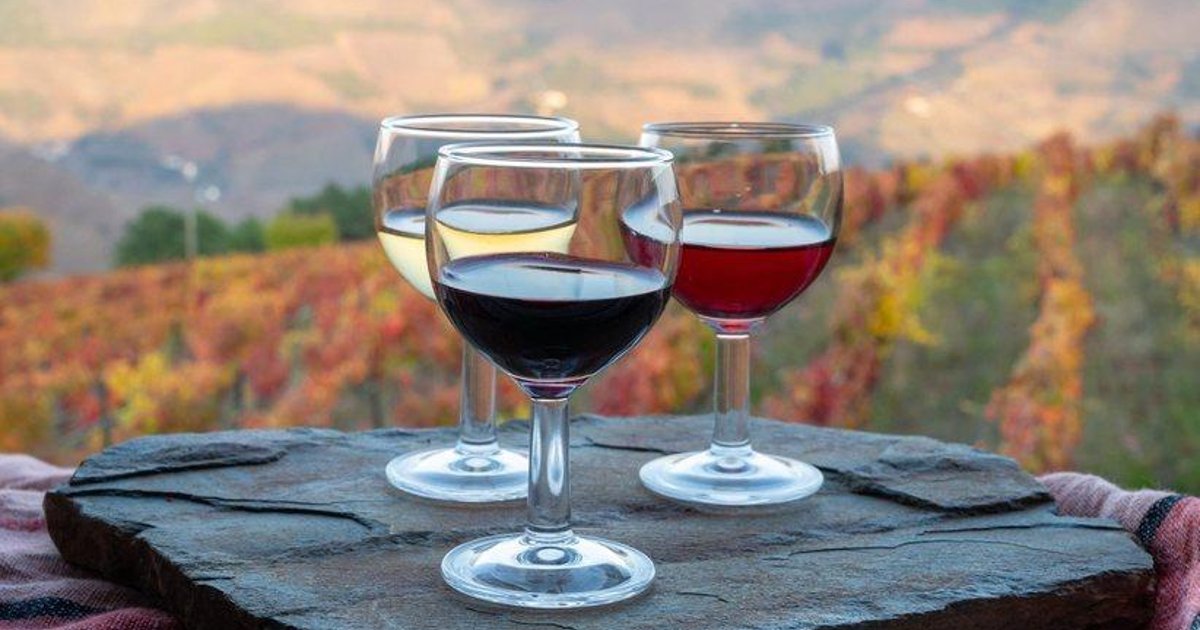
Start with Your Glass, Then Look at the Map
For travelers comparing Portugal wine regions, the clearest starting point is preference: choose the Douro for Port and structured reds, Minho and Vinho Verde for fresh whites, or the Alentejo for generous reds and clay-pot winemaking. Lisbon and Sintra bring Colares sand-grown wines into focus; Setúbal and Arrábida offer Moscatel and Castelão. Porto and Vila Nova de Gaia complete this selection through their Port lodges, not as a separate wine appellation. These are six travel destinations, rather than a complete survey of Portuguese wine regions.
Geography then turns those preferences into a coherent journey. Porto, Gaia, Minho and the Douro form a northern grouping, while Lisbon, Sintra, Setúbal and the Alentejo suggest a different route. There is no need to include every destination to understand the contrasts. A white-wine enthusiast might prioritize Minho before adding the Douro; someone drawn to fortified wines could compare Gaia’s Port with Setúbal’s Moscatel on a broader journey. Choose a central interest first, then add a destination that changes the conversation rather than simply extending the winery list.
The Douro: Choose the Vineyard Landscape Behind the Wine
The Douro suits travelers who want the growing landscape to be central to their wine journey. Terraces climb schist hillsides above the river, and the valley produces both Port and dry reds built around grapes such as Touriga Nacional and Touriga Franca. Violet, dark-fruit, perfume and firm structure are useful expectations, not promises for every bottle. Compared with the Alentejo’s generally rounder, fruit-forward reds, the Douro offers a different starting point for exploring structure and blending. Compared with Gaia, it places the vineyard rather than the ageing lodge at the center.
Choose an area within the valley rather than treating every estate as equally convenient. Peso da Régua anchors the greener Baixo Corgo, while Pinhão is a useful reference point for the Cima Corgo; the Douro Superior stretches farther east. Quinta do Crasto produces dry reds alongside Port, and Quinta do Bomfim connects Pinhão with Dow’s Port. Quinta de la Rosa also makes both styles. Narrow, winding roads argue for an unhurried stay and a geographically focused selection. An estate hotel may shape where you sleep, but accommodation does not guarantee a tasting reservation.
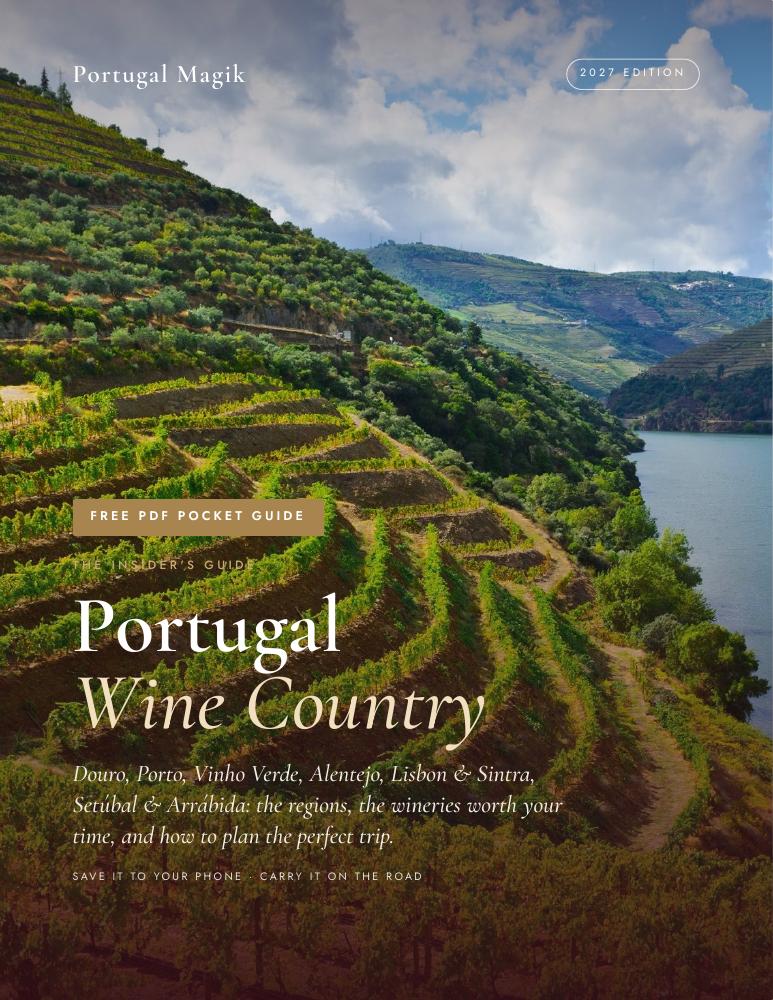
Portugal Magik · 2027 edition
Your pocket guide to Portugal wine country.
Thirty pages of wine regions, selected wineries, native grapes and thoughtful travel inspiration — with Gonzalo’s welcome and Portugal Magik’s trip-planning contacts.
Free PDF · 30 pages · 6.1 MB · No email required
Porto and Gaia: Follow Port from Fruit to Cask
Choose Porto and Vila Nova de Gaia when your main interest is how Port develops after the grapes leave the vineyard. Port comes from the Douro; historically, young wine traveled downriver to Gaia’s lodges for ageing. That distinction makes the city and valley complementary rather than interchangeable. Ruby styles preserve deep fruit through ageing in large vats or bottle, while tawny styles develop amber color and nutty character through contact with air in smaller casks. A lodge visit can therefore provide a focused introduction before, or a reflective conclusion after, time among the Douro terraces.
Let your interests narrow the choice of houses. Ferreira is associated with historic cellars and Dona Antónia Ferreira; Ramos Pinto adds advertising art and a museum in its founder’s original offices. Graham’s has the Vinum restaurant, while Taylor’s offers a self-guided audio tour and a garden terrace. These are different contexts for learning about the same wine family, not reasons to collect every lodge in succession. Select visits for the styles or stories you want to compare, leaving room for Porto itself. Confirm arrangements ahead rather than assuming riverfront location means immediate access.
Minho and Vinho Verde: Give White Wine the Leading Role
Minho and Vinho Verde are the natural choice in this selection for travelers whose curiosity begins with white wine. The northwest combines Atlantic rain, granite soils and a landscape of manor houses and pergola-trained vines. Many wines tend toward citrus freshness and bright acidity, sometimes with a gentle sparkle, but that familiar profile is only a starting point. Alvarinho around Monção and Melgaço can be richer and more structured, while Loureiro from the Lima valley tends toward floral elegance. Choose this destination to explore differences within white wine, rather than treating it as a light interlude.
Your preferred grape can guide the route. Quinta de Soalheiro in Melgaço and Anselmo Mendes offer reasons to focus on Alvarinho, while Quinta do Ameal in the Lima valley is devoted to Loureiro. Palácio da Brejoeira brings palace and garden interests into an Alvarinho-focused plan. For a northern journey, Minho provides a clear contrast with both fortified Port and Douro reds. If your group has mixed interests, places such as Braga or Ponte de Lima can help balance wine with time elsewhere. Avoid choosing scattered estates merely because they share the Vinho Verde name.
The Alentejo: Generous Reds and a Question of Clay
The Alentejo is a persuasive choice for drinkers drawn to round, fruit-forward reds and for travelers interested in how wine is made. Aragonez, Trincadeira and Alicante Bouschet are important grapes here, while Antão Vaz provides another direction through whites that can show ripe fruit and texture. The region also preserves vinho de talha, wine fermented in large clay vessels. That tradition gives the Alentejo a distinct focus beyond a preference for fuller reds. Against the Douro’s terraced river valley, its rolling plains, cork oaks and whitewashed towns create a markedly different setting.
Plan this destination in local clusters. Évora and Adega da Cartuxa belong together geographically; Reguengos de Monsaraz brings Herdade do Esporão, José de Sousa and Ervideira into consideration alongside Monsaraz. José de Sousa’s working talha cellar is relevant if clay fermentation motivates the journey, while Herdade do Rocim in Vidigueira offers another perspective on amphora winemaking. Do not assume every Alentejo tasting will explore talha: make that interest explicit when arranging visits. The stronger itinerary follows a question through a manageable area, instead of moving constantly between distant estates with different specialties.
Your dates. Your wines. Your pace.
Make wine country part of your private Portugal journey.
Multi-day travel, transportation and an English-speaking private driver, with selected wineries and places. We help coordinate restaurants, hotels and visits around your plans; availability and costs are confirmed privately.
Lisbon and Sintra: Choose Colares for a Different Vineyard Story
Lisbon and Sintra suit travelers who want wine to deepen a journey already centered on the capital and its surroundings. Colares, between Sintra and the Atlantic, is the defining wine interest here: vines grow in sand, low to the ground and sheltered by cane fences from ocean winds. Ramisco reds tend to be firm when young and develop complexity with age; Malvasia de Colares whites can show floral and salty qualities. This is a different proposition from either the Douro’s structured blends or Minho’s bright whites, with vineyard conditions becoming an essential part of the comparison.
Adega Regional de Colares and Adega Viúva Gomes provide cellar names around which to investigate that story, with the latter associated with older Ramisco and Malvasia vintages. Actual tasting selections should be confirmed rather than inferred from a producer’s reputation. The wider Lisbon area also introduces crisp Arinto from Bucelas and fortified Carcavelos. For travelers deciding between this destination and Setúbal, choose Lisbon and Sintra when sand-grown vines and these grape varieties are the stronger draw. Let palace and coastal interests help shape the balance, without reducing the wine visit to an afterthought.
Setúbal and Arrábida: Moscatel with a Coastal Counterpoint
Setúbal and Arrábida are a fitting choice when fortified wine appeals but Port is not the whole story you want to hear. Across the Tagus from Lisbon, Moscatel de Setúbal develops through extended contact with grape skins, with orange peel, honey and apricot among its characteristic aromatic tendencies. Castelão offers a red-wine counterpoint, particularly around the sandy soils of Palmela. Compared with Colares, this destination shifts the emphasis from coastal sand-grown Ramisco and Malvasia toward Moscatel cellars and a different red grape. Arrábida’s limestone mountains and coastline give the surrounding journey its own identity.
Azeitão brings several possible wine interests together. José Maria da Fonseca is associated with Periquita and Moscatel, with a historic manor, gardens and old cellars. Bacalhôa connects wine with a palace, gardens and a winery-museum art collection; Horácio Simões offers another family-house perspective on Moscatel. Choose according to the wine and setting that interest you, with access confirmed for the specific arrangements. Palmela’s castle, queijo de Azeitão and torta de Azeitão can broaden the regional context. For a Lisbon-centered journey, Setúbal and Colares make a useful contrast rather than competing versions of the same visit.
Build a Journey Around Contrast, Not Coverage
The strongest itinerary usually has an anchor and a counterpoint: Douro vineyards with Gaia lodges, Minho whites with Douro reds, or Colares with Setúbal’s Moscatel. Add the Alentejo when its wines and clay traditions justify a distinct chapter rather than a hurried detour. Season also matters. The Douro and Alentejo can be very hot in summer, making morning tastings worth considering; spring offers another setting, including Alentejo wildflowers. Harvest may bring opportunities at some estates, but participation should never be assumed. Choose the season for the overall journey, then confirm individual visits.
Portugal Magik shapes multi-day private journeys with transportation, an English-speaking private driver, selected wineries and places, and assistance coordinating hotel, restaurant and visit bookings. The useful starting brief is simple: preferred wine styles, the places already on your route, and how much of the journey you want devoted to wine. Costs and availability are confirmed privately, and a hotel stay remains separate from a tasting reservation. The aim is not to cover every destination, but to give each chosen place enough room to explain something the others cannot.
Questions before your wine journey
Which destination should I choose if I mainly drink red wine?
Start with the Douro for structured reds associated with Touriga Nacional and Touriga Franca, or the Alentejo for generally rounder, fruit-forward styles. Geography can settle the choice: the Douro fits a northern route, while the Alentejo works with a Lisbon-centered journey. These are tendencies, so individual bottles may challenge the broad comparison.
Does visiting Gaia replace a trip to the Douro?
Not if you want to understand the vineyard landscape. Gaia focuses on Port lodges and ageing; the Douro is where Port grapes grow and where dry wines also provide an important reason to visit. Choose Gaia for a city-based introduction, or combine both to connect growing conditions with the wine’s later development.
Can white-wine lovers build a journey around these destinations?
Yes. Minho offers a focused comparison of Alvarinho and Loureiro, while Lisbon and Sintra introduce Malvasia de Colares and Arinto from Bucelas. Antão Vaz adds an Alentejo alternative. Rather than crossing the country solely to collect varieties, choose the white-wine destination that best fits your route and explore its internal differences.
How can Portugal Magik help organize a wine-focused trip?
Portugal Magik offers multi-day private journeys with transportation, an English-speaking private driver, selected wineries and places, and assistance coordinating hotel, restaurant and visit bookings. Share your wine preferences and intended route to guide the selection. Costs and availability are confirmed privately; neither accommodation nor an itinerary suggestion guarantees a particular tasting or estate visit.
Based on Portugal Magik’s Portugal Wine Country pocket guide, 2027 edition. Estate visits, experiences and reservations are subject to confirmation.